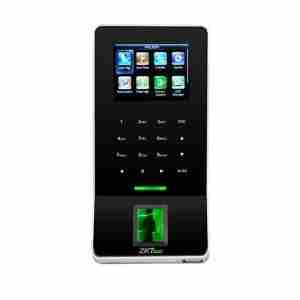
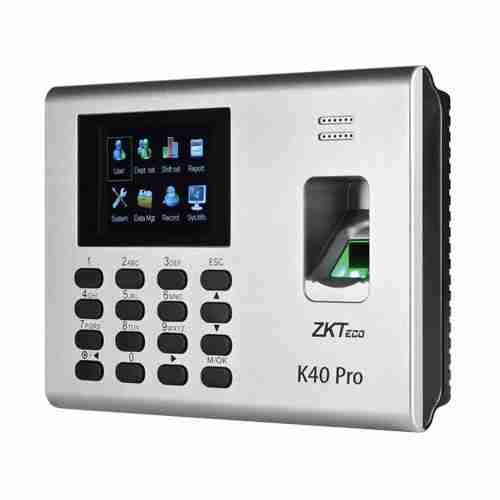
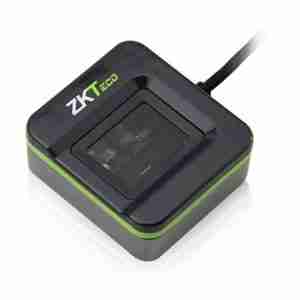
Fingerprint is the most widely adopted biometric solution for identity verification and authentication owing to its speed, user-friendliness, high level of accuracy, security and cost-effectiveness. Biometric fingerprint scanning utilises the unique patterns of ridges and valleys on a person’s fingertips for verifying his/her identity.
Fingerprint devices are used in various applications across numerous sectors such as access control, time and attendance tracking, Identity verification for government services, banking and financial transactions, patient identification in healthcare, law enforcement and criminal identification. Fingerprint scanning involves several key steps such as recording the digital image of the fingerprint using a sensor, identifying unique patterns on the fingerprint using a software, converting these features into a digital template and finally comparing the scans against stored templates for verification.
As the No.1 Security and Identification solutions provider in India, ScreenCheck offers you a vast array of Fingerprint scanners and Fingerprint Access Control terminals from ZKTeco which stands out for their remarkable accuracy, security and ease of use. To learn more about ZKTeco’s fingerprint devices, get in touch with ScreenCheck, your trusted fingerprint device distributor in India.
FAQs
1. What are the benefits of installing a fingerprint scanner in your organisation?
A fingerprint scanner offers a lot of advantages for your organisation, enabling you to identity authentication challenges and safeguarding your business. The key benefits include:
- High accuracy rates compared to other verification methods
- Difficulty forging or replicating
- Non-transferable; can’t be lost, stolen or shared
- Easy to use, and does not require password memorisation
- Faster authentication process
- Cost-effective for large-scale deployments
- Saves time and costs
2. What are the benefits of optical fingerprint scanners?
- Compared to Capacitive scanners, Optical Scanners are more affordable. This makes them the best option for large-scale deployments in organisations.
- They are versatile and can be used in various applications such as smartphones, laptops, and access control systems.
- Optical scanners can be easily integrated with existing systems owing to their standardised design and compatibility with different software.
3. What are the different types of fingerprint scanners?
There are four types of fingerprint scanners: Optical scanners, Capacitive scanners, Ultrasonic scanners and In-display scanners.